

What Is Vulnerability Triage? A Practical AppSec Workflow
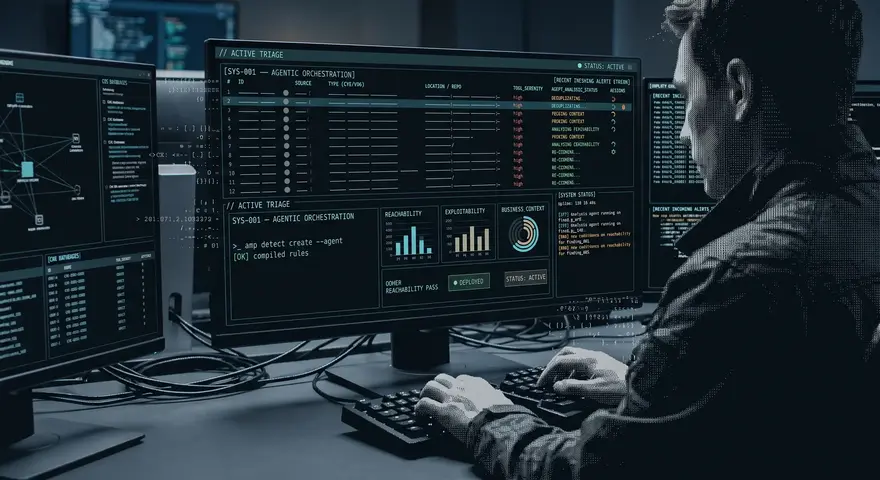
Security teams rarely struggle to find vulnerabilities. Scanners are good at that part. What actually slows teams down is deciding which findings matter, what deserves attention first, who owns the fix, and how to move a finding toward remediation without burning hours on manual investigation.
That decision-making process is triage, and it's usually where AppSec programs lose the most time.
What Is Vulnerability Triage?
Vulnerability triage is the process of taking a raw security finding and figuring out what it actually is, whether it's real, whether it matters, and what should happen to it next. It sits between "a scanner flagged something" and "someone is actively fixing it."
A finding enters triage as an unverified alert. It leaves triage as one of three things: a validated risk with an owner and a priority, a duplicate of something already tracked, or a false positive that gets closed out. Triage is the filter that decides which of those three buckets a finding belongs in.
This is different from vulnerability management, which is the umbrella term for the entire lifecycle — discovery, triage, remediation, and verification, repeated continuously. Triage is one stage inside that lifecycle, and arguably the stage where the most time gets wasted if it isn't deliberate.
Why Vulnerability Triage Becomes a Bottleneck in AppSec
Most AppSec teams don't have a shortage of tooling. They have a surplus of findings and no reliable way to sort through them quickly.
A handful of patterns show up again and again:
Scanner sprawl multiplies the same finding. SAST, SCA, DAST, and cloud posture tools each flag issues independently, often the same underlying vulnerability reported three or four different ways. Without deduplication, a team can spend hours investigating what turns out to be one issue wearing four different tickets.
Severity scores don't reflect real risk. A CVSS "critical" rating tells you how bad a vulnerability could be in the abstract. It says nothing about whether the vulnerable code is ever executed in your application, whether it's exposed to the internet, or whether an attacker could realistically reach it. Teams that triage by severity score alone end up spending their best hours on vulnerabilities that were never actually dangerous.
Ownership is unclear until late. A finding can sit unassigned for days simply because no one has decided whose code it lives in or who's responsible for the fix. That delay compounds every other inefficiency in the process.
There's no feedback loop. Some teams fix findings and move on without confirming the fix actually resolved the issue, which means the same vulnerability can resurface weeks later, undetected, because no one validated the fix in the first place.
Each of these problems is small on its own. Together, across a backlog of hundreds or thousands of findings, they turn triage into the actual bottleneck in the security program — not detection, not even remediation, but the decision-making step in between.
What Information Should Be Evaluated During Triage?
Good triage evaluates several signals together, not any single one in isolation:
- Finding type and location — what kind of vulnerability this is and where it lives in the codebase or infrastructure
- Duplication — whether this is the same underlying issue already flagged by another tool or already tracked under a different ticket
- Code and runtime context — what the surrounding code actually does, and how the vulnerable component is used
- Reachability — whether the vulnerable path can actually be executed, either by normal application flow or by an attacker
- Exploitability — whether reaching the vulnerable code translates into something an attacker could actually leverage
- Data sensitivity and exposure — what the affected system touches, and whether it's internet-facing or internal-only
Severity score is the input most teams lean on hardest, and it's the least reliable one on its own. It's a useful starting signal, not a triage decision.
A Practical Vulnerability Triage Workflow
A triage process that actually holds up under volume tends to follow the same general sequence, regardless of the specific tools involved:
1. Finding. A scanner, a bug bounty report, a manual pentest, or a dependency alert surfaces a potential issue.
2. Deduplicate. Check whether this finding is already tracked under a different tool or ticket. This step alone can eliminate a meaningful share of "new" findings before any investigation starts.
3. Add context. Pull in the surrounding code, the component's role in the application, and any relevant runtime or deployment information. This is what turns a bare finding into something a human (or an automated system) can actually reason about.
4. Check reachability and exploitability. Determine whether the vulnerable path can be executed, and if so, whether an attacker could realistically exploit it. This is usually the single highest-leverage step in the entire workflow, because it's where the largest share of findings get correctly deprioritized.
5. Prioritize. Rank the remaining, validated findings by real-world risk — combining reachability, exploitability, data sensitivity, and exposure. This is the step people often call "triage" on its own, but it only works well if the earlier steps have already filtered out the noise.
6. Assign an owner. Route the finding to whoever is responsible for the affected code, with enough context attached that they don't have to reinvestigate it from scratch.
7. Remediate. The owner fixes the issue — manually, with a suggested patch, or through automated remediation tooling.
8. Validate. Confirm the fix actually resolves the finding rather than just closing the ticket. This might mean rerunning the original scan, checking the specific code path, or confirming with the reporter for externally-sourced findings.
9. Track. Log the resolution and keep a record for audit, compliance, and pattern recognition — recurring finding types across the codebase are often a sign of a systemic issue worth fixing at the root.
Severity vs. Reachability vs. Exploitability vs. Business Context
These four terms get used loosely and interchangeably, which causes a lot of triage confusion. They're not the same thing:
- Severity is a static rating (usually CVSS) describing how bad a vulnerability type could theoretically be, independent of your specific application.
- Reachability describes whether the vulnerable code can actually be executed in your application, given how the code is actually structured and called.
- Exploitability describes whether, assuming the code is reachable, an attacker could realistically trigger the vulnerable behavior in a way that causes harm.
- Business context describes what's actually at stake if the vulnerability is exploited — what data it touches, what system it affects, and how exposed that system is.
A vulnerability can be severity-critical, reachable, exploitable, and touch sensitive data — genuinely urgent. Or it can be severity-critical and completely unreachable, in which case it's close to irrelevant. Triage that only looks at severity can't tell these two cases apart. Triage that incorporates all four generally can.
Common Vulnerability Triage Mistakes
Triaging by severity score alone. This is the single most common mistake, and it's usually not a lack of awareness — it's that reachability and exploitability checks take real engineering time to do manually, so severity becomes the default proxy for risk even though it's a weak one.
Skipping deduplication. Investigating the same underlying issue multiple times because it showed up under different tool names or ticket numbers.
Treating every scanner finding as equally trustworthy. Different tools have different false-positive rates for different vulnerability classes. Triage that doesn't account for this ends up wasting time on categories a given tool is known to over-report.
Assigning ownership too late. Waiting until after prioritization to figure out who owns the fix adds pure delay with no offsetting benefit — ownership can often be determined during the context-gathering step.
No validation step. Closing a ticket when a fix is submitted, without confirming the fix actually addresses the vulnerable path, leaves room for the same issue to resurface.
Where Automation Can Remove Repetitive Work
Not every step in the triage workflow benefits equally from automation, and it's worth being specific about which ones do.
Deduplication across tools is a good automation candidate — it's largely pattern matching against known findings and doesn't require judgment. Context gathering is similarly mechanical: pulling in the relevant code, call graph, and deployment information is repeatable work regardless of who or what does it. Reachability analysis, done well, is exactly the kind of static and dynamic analysis that automated tooling can perform faster and more consistently than manual code review. Prioritization, once reachability and exploitability are known, becomes a scoring exercise that can be codified into rules.
What still benefits from a human in the loop: ambiguous business context that isn't captured anywhere in the codebase, genuinely novel attack patterns that don't match existing detection logic, and cases where automated reachability analysis can't reach a confident answer either way.
The realistic goal isn't removing judgment from triage. It's removing the repetitive 70-80% of triage work — the deduplication, the context assembly, the reachability checks — so that the judgment calls that remain get a security engineer's full attention instead of a fraction of it after hours of manual investigation.
This is the specific gap Amplify Console is built around: automating custom detection, triage, and reachability analysis so findings arrive with context and a defensible priority already attached, rather than as a raw list a security engineer has to work through from zero.
How Modern AppSec Teams Can Move from Detection to Remediation Faster
The teams that move fastest from a finding to a validated fix generally share a few traits: they've automated the parts of triage that don't require judgment, they route findings to owners with context attached rather than a bare ticket, and they treat reachability as a first-class signal rather than an occasional manual check reserved for the highest-severity findings.
None of that requires abandoning existing tooling. A reachability-aware prioritization approach layered on top of existing SAST, SCA, and DAST tools tends to produce better results faster than replacing the detection layer outright — the detection tools are usually fine. It's what happens to their output that determines whether a team is actually moving faster or just accumulating a longer backlog.
FAQ
What is vulnerability triage? Vulnerability triage is the process of investigating a security finding to determine its validity, risk, and next action before remediation begins. It includes deduplication, context gathering, reachability and exploitability checks, prioritization, and ownership assignment.
How do AppSec teams triage vulnerabilities? Most teams follow a version of the same sequence: deduplicate findings across scanners, add code and runtime context, check whether the vulnerable path is reachable, assess exploitability, prioritize by real-world risk, assign an owner, remediate, and validate the fix.
What is the difference between vulnerability triage and vulnerability prioritization? Triage is the broader investigation process — validating, enriching, and routing a finding. Prioritization is one step inside triage: ranking findings by real-world risk once you already know they're valid and reachable.
How should security teams prioritize vulnerabilities? By combining reachability, exploitability, data sensitivity, and exposure — not by severity score alone. A critical CVSS rating on unreachable code is a much lower priority than a medium-severity finding on an exploitable, internet-facing path.
What role does reachability play in vulnerability triage? Reachability determines whether the vulnerable code can actually be executed, either through normal application flow or by an attacker. It's often the fastest way to reduce triage volume, since unreachable findings can be safely deprioritized regardless of their severity score.
Can vulnerability triage be automated? Large parts of it can. Deduplication, context gathering, reachability analysis, and rules-based prioritization are all good automation candidates. Ambiguous business context and genuinely novel attack patterns still benefit from a security engineer's judgment.
Moving From Noisy Findings to Actionable Remediation
Triage isn't the exciting part of AppSec, but it's the part that determines whether the rest of the program actually works. A team with a fast, consistent triage process can absorb scanner sprawl and still ship fixes quickly. A team without one drowns in its own findings regardless of how good its detection tools are.
If your team's triage process still runs mostly on manual review and spreadsheet tracking, that's usually the first place to look before adding another scanner to the stack.
Subscribe to Amplify Weekly Blog Roundup
Subscribe Here!
See What Experts Are Saying
BOOK A DEMO


Jeremiah Grossman
Founder | Investor | Advisor

Saeed Abu-Nimeh
CEO and Founder @ SecLytics
Kathy Wang
CISO | Investor | Advisor
.jpg?width=1200&height=1600&name=IMG-20210714-WA0000%20(1).jpg)
Alex Lanstein
Chief Evangelist @ StrikeReadyFrequently
Asked Questions
What is vulnerability management, and why is it important?
Why is vulnerability management important?
What makes vulnerability management extremely challenging in today’s high-growth environment?
How can Amplify help me with vulnerability management?
What technology does the Amplify platform integrate with?
Have a
Questions?
Contact Us
Ready to
Get started?
Book A GUIDED DEMO
