Engineering and security teams are locked in a persistent standoff. Security tools generate thousands of vulnerability alerts, and developers are tasked with fixing them. But without context, prioritization, or clear remediation steps, most of these alerts sit untouched in a backlog.
Related resources:
Explore the agentic AI cybersecurity platform
Compare agentic security harnesses
Visit Amplify Security
The traditional approach to application security focuses almost entirely on detection. Organizations deploy Static Application Security Testing (SAST), Dynamic Application Security Testing (DAST), and Software Composition Analysis (SCA) tools to scan their codebases. These tools are highly effective at finding potential flaws. They are completely ineffective at telling you which flaws actually matter or how to fix them efficiently.
To scale security without slowing down release cycles, organizations must shift their focus from finding vulnerabilities to fixing them. This requires a transition to an ai appsec platform for enterprises, a system designed not just to aggregate alerts, but to understand code context, verify exploitability, and generate accurate remediation code.
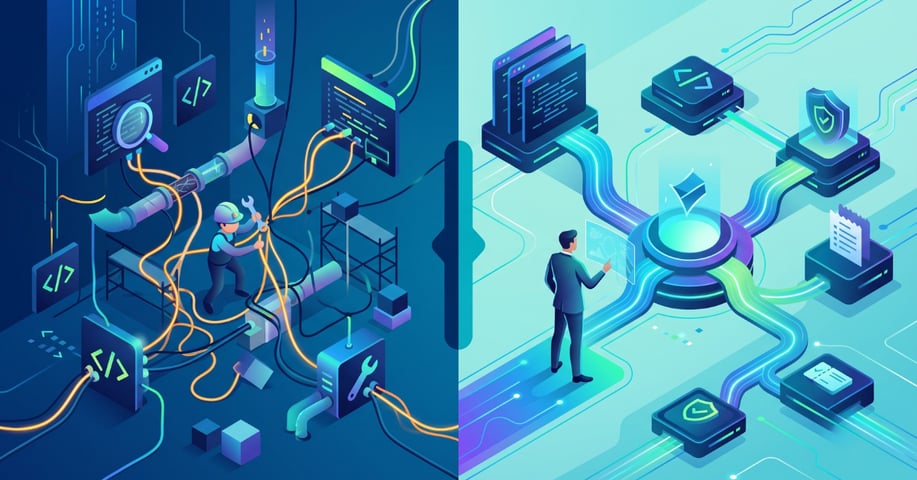
The Legacy AppSec Trap: More Scanners, More Noise
Most enterprise AppSec programs operate on a flawed premise. They assume that more visibility leads to better security. In reality, unchecked visibility leads to alert fatigue.
When a standard SAST tool scans an enterprise application, it flags every instance of a vulnerable function or outdated library. It does not check if that library is actually loaded into memory. It does not verify if the vulnerable function is reachable from an external user input. It simply generates a ticket.
This creates an operational disaster. Security teams spend hours manually triaging findings to filter out false positives. When they finally pass the verified vulnerabilities to the engineering team, developers have to drop their current sprint work, investigate the unfamiliar security context, research a fix, write the code, and push it through testing.
The result is a Mean Time to Remediation (MTTR) measured in weeks or months. Developers become frustrated with security blocking their workflow, and security teams remain frustrated by mounting risk.
What Defines a True AI AppSec Platform for Enterprises
Adding a basic large language model to a legacy scanner does not create an AI AppSec platform. True AI native security requires deep architectural integration. An effective ai appsec platform for enterprises must execute three core functions autonomously.
First, it must perform contextual triage. The platform must analyze the application architecture to understand how data flows through the application. By mapping the execution path, the AI can determine if a flagged vulnerability is actually reachable by an attacker. If a vulnerable library is present but never executed in the compiled application, the platform should deprioritize or suppress the alert automatically.
Second, it must generate developer ready fixes. Telling a developer they have a Cross Site Scripting (XSS) vulnerability is not helpful. Providing the exact code required to sanitize the specific input within their exact framework is highly helpful. The platform must understand the local codebase well enough to suggest idiomatic, accurate fixes that will not break existing functionality.
Third, it must integrate seamlessly into the developer workflow. Security cannot be a separate portal developers log into once a month. The AI must meet them where they work, typically inside their Pull Requests or integrated development environment.
Moving from Detection to Automated Remediation
The transition to automated vulnerability remediation fundamentally changes how engineering teams view security. Instead of acting as a roadblock, security becomes an automated assistant.
When a developer commits code, the AI AppSec platform scans the changes in real time. If it detects a flaw, such as an exposed secret or an insecure database query, it does not just block the build. It automatically generates a pull request comment containing the required fix. The developer can review the suggested code, approve it, and merge the secure code immediately.
This micro remediation approach prevents vulnerabilities from ever entering the main branch. It shrinks the feedback loop from weeks to minutes. Developers learn secure coding practices naturally by reviewing the AI generated fixes within the context of their own work.
Context is the Missing Link in Vulnerability Management
AI models require deep context to be useful. Generic security advice is readily available on the internet. Enterprise engineering teams do not need generic advice. They need specific solutions for their proprietary environments.
An advanced AI AppSec platform builds a comprehensive graph of the enterprise environment. It understands the relationship between repositories, microservices, APIs, and deployment configurations. When an AI possesses this level of context, its outputs transform from generic suggestions into precise engineering directives.
For example, if a critical zero day vulnerability is announced in a popular logging framework, a legacy tool will simply flag every repository containing that framework. An AI platform with context will identify the repositories, verify which ones are actively deploying the vulnerable function, assess the compensating controls already in place, and automatically open pull requests with the necessary version bumps and syntax updates across the entire engineering organization.
Measuring the ROI of AI in DevSecOps
Adopting an AI driven approach delivers measurable business outcomes. Security leaders can track specific metrics to demonstrate the return on investment.
Reduction in False Positives: By using reachability analysis and context mapping, enterprises often see a massive drop in noise. This saves thousands of hours of manual triage time annually.
Decreased Mean Time to Remediation (MTTR): Automated fixes allow teams to resolve critical vulnerabilities in hours rather than months.
Increased Developer Velocity: When developers spend less time researching security fixes, they spend more time building core product features.
Higher Fix Rates: Presenting a developer with a complete, contextual fix dramatically increases the probability that the vulnerability will be resolved immediately.
Evaluating Your Next Enterprise AppSec Solution
When evaluating an ai appsec platform for enterprises, security leaders must look past marketing claims and demand proof of capability.
Ask vendors to demonstrate how their platform handles complex, multi repository environments. Require them to prove their reachability analysis on your actual codebase. Most importantly, measure how their AI generated fixes integrate into your existing CI/CD pipelines.
The future of application security is not about finding more problems. It is about automating the solutions. Organizations that adopt context aware, AI driven remediation will secure their applications faster, reduce developer friction, and finally clear the AppSec backlog.
Ready to see how automated remediation can transform your engineering velocity? Request a demonstration of the Amplify Security platform today and learn how we help enterprises fix vulnerabilities at scale.
Ready to upgrade your AppSec operations?
Apply for early access to Amplify Console and see how an agentic security harness can transform your vulnerability management today.









.jpg?width=1200&height=1600&name=IMG-20210714-WA0000%20(1).jpg)
